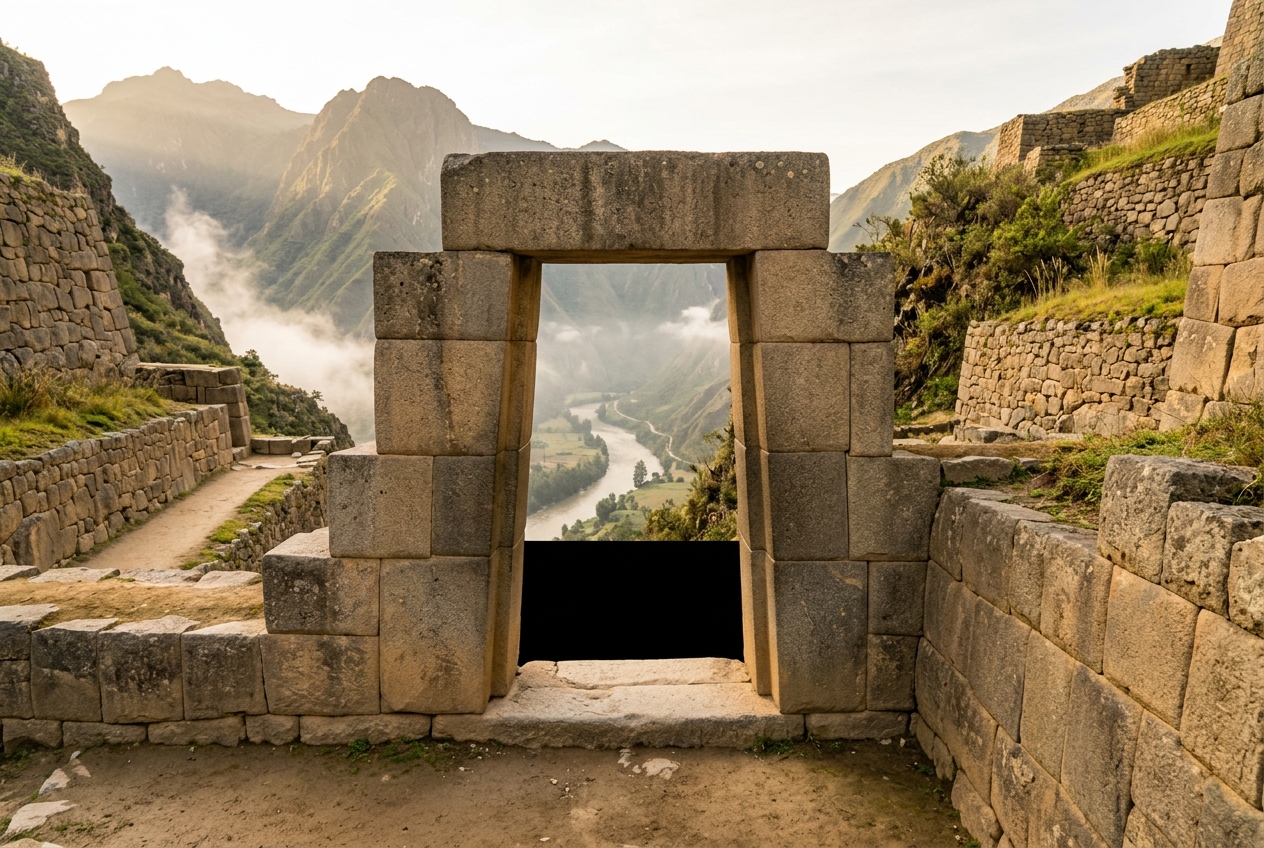
Ollantaytambo
Six massive red granite monoliths fit together in ways that suggest a technology nobody has yet explained.
What mainstream archaeology says
Ollantaytambo was an Inca royal estate and ceremonial center, and one of the best-preserved examples of Inca town planning.
What the evidence actually shows
The Temple of the Sun's six monolithic rose granite blocks, each weighing 50+ tons, were transported from a quarry 6 miles away — across the Urubamba River and up a near-vertical mountain face. The T-shaped stone clamps and massive stone 'staples' used to join the blocks have no known Inca analog.
Key facts
- ◆Red granite monoliths sourced from a quarry on the opposite side of the Urubamba River
- ◆T-shaped metal clamps (now missing) connect certain blocks — same technique found at Tiwanaku
- ◆Massive unfinished stones still in the quarry suggest sudden abandonment
- ◆The lower terraces use a completely different construction style than the upper temple
Visit Ollantaytambo
Aaron leads private expeditions to this site. Tell him it's on your list and he'll build the rest of the itinerary around it.
Plan This VisitSite Info
Related Sites
Chinchero
Polygonal stone walls with less than 0.5mm tolerance — no crane, no mortar, no explanation.
Machu Picchu
The famous citadel is real — but nobody really knows when it was first built or by whom.
Pisac
A massive hilltop complex with agricultural terraces, temples, and astronomical observatories that span multiple construction eras.